

General
Brain Tumours Explained: Types, Symptoms and Advances in Neurosurgical Treatment
The human brain is essential to survival. It controls how we think, communicate, and respond to our surroundings. But these functions are interrupted when abnormal cells grow within the brain.
These abnormal growths are called brain tumours, and their effects on the body often depend on their size, location, and growth rate. While the term does sound alarming, one needs to understand that not all brain tumours are cancerous.
Some grow slowly and may require regular monitoring, while others grow more aggressively and may require earlier medical intervention. But the most important part to remember is that even non-cancerous tumours can affect functions if they press against surrounding brain tissue.
So it is essential to understand the types of brain tumours, recognise their symptoms, and learn about advances in neurosurgical treatment. By staying informed, we can take better care of ourselves and lead a life of well-being.
What is a brain tumor?
A brain tumor is an abnormal growth of cells that develops in the brain or its surrounding tissues. Under normal circumstances, cells grow and divide in a controlled manner, but they can also multiply abnormally, forming a mass called a tumor.
They are generally classified into categories based on where they originate:
- Primary brain tumours: These tend to originate in the brain or nearby tissues, and they can either be non-cancerous or cancerous depending on the type of cell.
- Secondary or metastatic brain tumours: These occur when cancer cells spread to the brain from another part of the body, such as the lungs or breasts.
Brain tumours can also be described as benign (non-cancerous) or malignant (cancerous). While benign tumours generally grow slowly, the latter tends to grow more aggressively and can even invade surrounding brain tissues.
To better understand how tumours behave, doctors use a grading system. These grades can range from 1 to 4, depending on the tumor type, with higher grades indicating more aggressive growth.
Whether the tumor is benign or malignant, its location and effect on surrounding brain structures play an important role in determining treatment.
Different types of brain tumours
Brain tumours come from different types of cells in or around the brain. Each type has its own features, growth patterns, and effects.
Understanding these differences helps doctors choose the right treatment approach.
1. Gliomas: These are primary brain tumours that develop from glial cells or their precursor cells in the brain and spinal cord. They vary in growth rate and severity, with common types including the following.
- Astrocytomas: These tumours range from slower-growing to more aggressive forms and develop in different parts of the brain.
- Oligodendrogliomas: tumours that develop in the cerebral hemispheres and are identified by specific molecular characteristics.
- Glioblastomas: These are aggressive tumours with rapid growth and infiltration of surrounding brain tissue.
2. Meningiomas: Popularly known to be non-cancerous with a slow growth rate, meningioma tumours develop from the meninges, the protective membranes surrounding our brain and spinal cord.
Depending on their size and location, they may press on surrounding structures and cause problems such as headaches, vision problems, or neurological difficulties.
3. Schwannomas: Schwannomas develop from Schwann cells, with a commonly identified type being vestibular schwannoma. These affect the nerves associated with hearing and balance and can cause hearing loss, ringing in the ears, or difficulty maintaining balance.
4. Pituitary tumours: While most pituitary tumours are non-cancerous, they can affect hormone production or cause vision problems by pressing against nearby structures. They develop in the pituitary gland, which is a small gland located at the base of the brain that regulates several hormones.
5. Metastatic brain tumours: These tumours occur when cancer spreads to the brain from another part of the body, especially cancers originating in the lungs, breasts, kidneys, or skin.
Treatment depends on the original cancer, the number and exact location of brain tumours, and a patient’s overall health. However, modern doctors also consider molecular and genetic characteristics when classifying certain brain tumours.
This approach enables more precise diagnosis and treatment planning.
Common symptoms and warning signs of brain tumours
Brain tumor symptoms aren’t the same for everyone. Some experience noticeable changes, while others develop symptoms over weeks or months, depending on the tumor’s location, size, and rate of growth.
However, the best way to be cautious is to be aware of the warning signs, and they include:
- Frequent or severe headaches that are often referred for medical evaluation are considered a warning sign for a brain tumor. But, headaches alone don’t indicate a brain tumor.
- Brain tumours can also interfere with normal electrical activity in the brain, leading to seizures. These could involve uncontrolled movements, unusual sensations, or a temporary loss of awareness.
- Increased pressure inside the human skull can at times lead to nausea or vomiting, especially when accompanied by headaches or other neurological symptoms.
- Depending on the affected area, individuals may also experience blurred vision, double vision, difficulty finding words, or difficulty understanding speech.
- Tumours affecting areas responsible for movement or sensation can cause weakness, numbness, or reduced coordination on one side of the body.
- Individuals experiencing dizziness, difficulty in walking, or an increased tendency to lose balance, which are balance and coordination problems, may also experience symptoms associated with a brain tumor.
- Brain tumours are also known to affect concentration, memory, decision-making, or personality, which result in changes noticeable to the individual or their family.
When should you seek medical attention?
Experiencing one or more of the symptoms mentioned above doesn’t automatically mean that an individual suffers from a brain tumor. Symptoms can also occur due to other medical conditions.
But if they persist or worsen, it is always important to consult a medical professional for evaluation. A first-time seizure, sudden weakness, or difficulty speaking calls for immediate emergency medical attention, as they might indicate a serious neurological condition.
What causes Brain tumours?
Medical research has certainly improved our understanding of brain tumours, but the exact cause of most primary brain tumours remains unknown to this day. These tumours develop when changes in certain cells' DNA affect how they grow and divide.
But such changes do not always have an identifiable cause. However, researchers have found certain factors that can increase the likelihood of developing specific types of brain tumours.
- Inherited genetic conditions: Genetic disorders such as neurofibromatosis, Li-Fraumeni syndrome and tuberous sclerosis are often associated with an increased risk of developing particular brain tumours.
- Exposure to ionizing radiation: Previous exposure to high doses of ionizing radiation, especially radiation therapy to the head, is a risk factor for specific brain tumours.
- Age: While brain tumours can occur at any age, some types of tumours are commonly diagnosed in particular age groups.
Having one or more risk factors does not mean an individual will develop a brain tumor.
Similarly, people diagnosed with a brain tumor have no identifiable risk factors, and there is no established way to prevent most primary brain tumours.
How are brain tumours diagnosed?
Diagnosing a brain tumor involves a series of medical examinations and tests to determine its location, size, characteristics, and potential effects on the brain.
When patients experience consistent neurological symptoms, doctors may recommend further evaluation to identify the cause. To learn more, let’s look into the most commonly used diagnostic methods.
- Neurological examination
This diagnostic process begins with a neurological examination, during which doctors evaluate reflexes, muscle strength, balance, coordination, vision, and memory.
These tests identify potential abnormalities in the nervous system and determine whether further testing is needed.
- MRI and CT scans
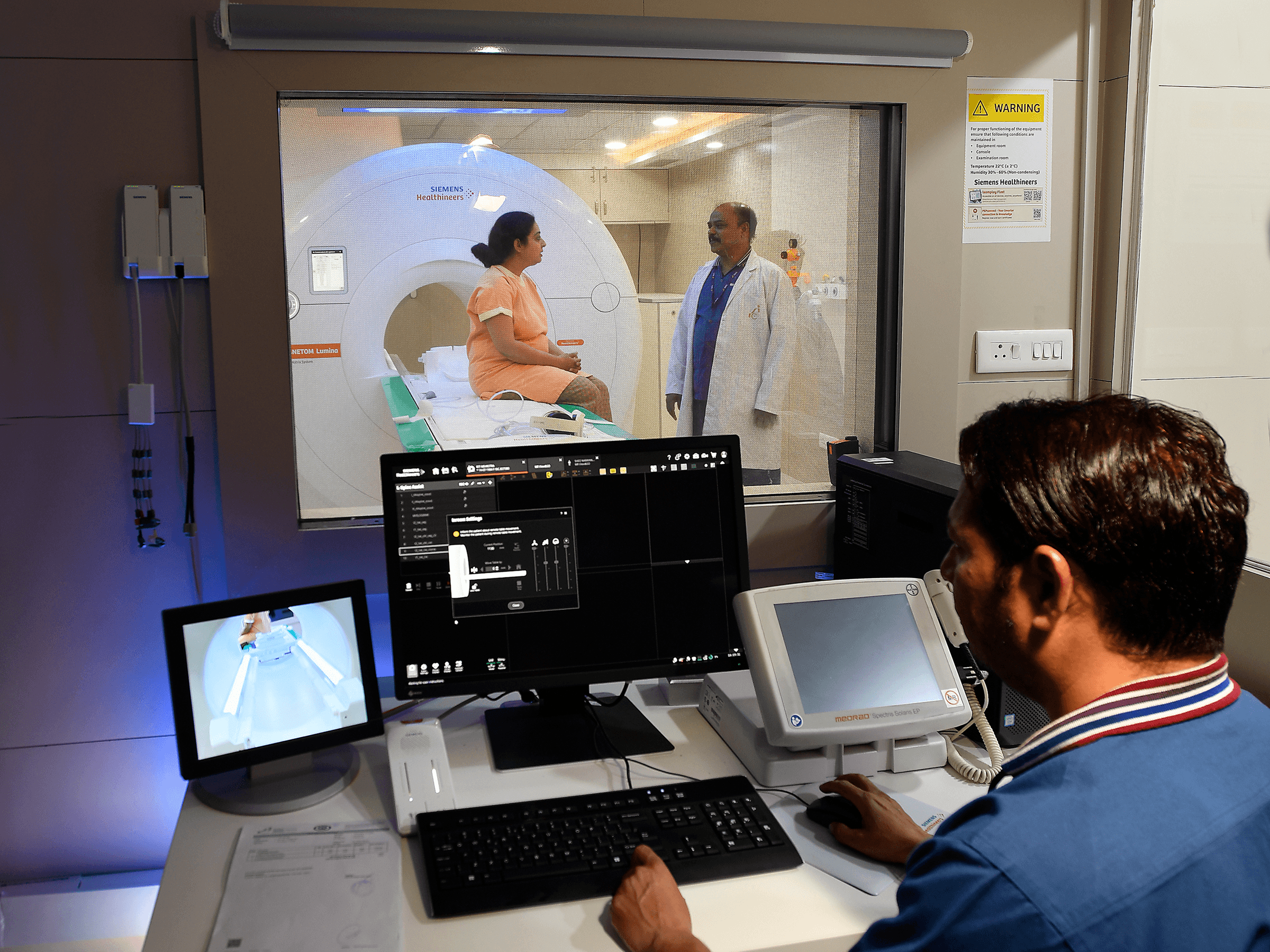
MRI (Magnetic Resonance Imaging) and CT (Computed Tomography) scans are used differently. MRI is the primary imaging method for identifying suspected brain tumours, while CT is used when MRI is unsuitable.
During an MRI, doctors review brain images to determine the tumor’s location, size, and proximity to other tissues. CT scans help spot bleeding, swelling, or changes in brain structure.
- Biopsy and histopathological examination
In specific other cases, doctors may recommend a biopsy to examine a sample of tumor tissue. Doctors then study the collected tissue under a microscope to identify the type and characteristics of the tumor.
Biopsies can be performed separately or during surgery to remove the tumor. But they aren’t always safe, especially when tumours are in sensitive areas or hard-to-reach parts of the brain.
- Molecular and genetic testing
Doctors now also check for certain genetic and molecular changes in tumor cells. These tests help classify tumours more accurately and show how they might behave.
They also help identify the most suitable treatment option and develop plans that fit the patient's overall health.
Advances in Neurosurgical Treatment for Brain tumours
Thanks to advances in medical technology, modern techniques have changed how we diagnose and treat brain tumours. These modern neurosurgical techniques help surgeons plan procedures and identify sensitive brain structures.
Regardless, the primary objective has always remained the same. Remove as much of the tumor as safely as possible while preserving essential neurological functions.
- Image-Guided Neurosurgery
Also known as neuronavigation, image-guided neurosurgery utilises MRI or CT images to help surgeons understand the tumor’s location and its relationship with surrounding brain structures.
Like a navigation system, this technology helps surgeons determine the surgical route and identify areas that need additional care. It is particularly useful for tumours located deep within the brain or close to structures responsible for neurological functions.
- Endoscopic Cranial Surgery
This surgery uses a thin instrument with a camera to visualise and access specific areas within or around the brain. Based on the tumor’s location, surgeons may use small surgical openings or natural passages to reach the affected area.
Such techniques can reduce the need for larger surgical openings in selected cases. But, endoscopic surgery may not be ideal for every brain tumor.
- Stereotactic Neurosurgical Procedures
Stereotactic neurosurgical procedures use three-dimensional imaging and specialised guidance systems to identify specific locations within the brain. This particular approach helps surgeons target deep-seated lesions for diagnostic procedures.
By providing detailed spatial guidance, these techniques help surgeons plan procedures around sensitive brain structures.
- Intraoperative Neurological Monitoring
This process involves assessing specific nervous system functions. Using specialised equipment, the team monitors electrical signals associated with neural pathways.
The information which they then receive helps them identify changes that require medical attention during the procedure. The type of monitoring they use depends on the tumor's location, the surgical approach, and the neurological functions that could be at risk.
While these advancements have certainly expanded the possibilities of brain tumor surgery, the choice of technique, determined by experts, is often based on the tumor’s characteristics, location, and the patient’s medical condition.
Other Treatment Options for Brain tumours
Although surgery plays an important role in treating brain tumours, doctors may recommend other approaches because surgery is not always necessary or suitable for every patient.
Doctors may recommend other approaches alone or alongside surgery.
- Radiation therapy: By using high-energy radiation, this process damages tumor cells and controls their growth and may be recommended either after surgery or when surgical removal isn’t suitable.
- Chemotherapy: This treatment uses medicines to manage some cancerous brain tumours. Its effectiveness depends on the tumor type, its molecular features, and the medicines used.
- Targeted therapy: This treatment uses medicines aimed at specific molecular changes in some tumours. It is used for certain patients based on their diagnosis.
- Active surveillance: Slow-growing tumours that do not cause significant symptoms can be monitored through regular clinical assessments and imaging rather than treated immediately.
As mentioned before, the treatment plan for brain tumours depends on the type, grade, location, molecular characteristics, and the patient’s overall health.
Recovery and Rehabilitation After Brain Tumor Surgery
Recovery after brain surgery is centered around the tumor’s location, the procedure performed, and the patient’s overall health. As a result, we often see both cases: some individuals recover without major difficulties, while others require rehabilitation to regain movement, communication, or everyday functioning.
Based on the patient’s needs, rehabilitation may include:
- Physiotherapy: To improve muscle strength, balance and mobility.
- Occupational therapy: To help individuals perform everyday tasks like dressing, eating, and personal care.
- Speech and language therapy: As the name suggests, to address communication and swallowing difficulties.
Follow-up consultations are also needed to monitor recovery and identify any changes that may require further treatment.
Brain Tumor Care at ISIC Multispeciality Hospital
Through our Neurosciences department, we provide neurological services, including neuro-oncology, image-guided neurosurgery, endoscopic cranial surgery, stereotactic procedures, and intraoperative neurological monitoring.
We also provide Physical Medicine and Rehabilitation services that may be relevant for patients requiring rehabilitation after neurological treatment.
For more information about our Neurosciences services, contact 011 42255225 or visit www.isichealthcare.org.
Disclaimer: This article provides general health information & does not replace professional medical advice, diagnosis or treatment. Always consult a qualified doctor for medical advice, diagnosis & treatment. Do not ignore symptoms, delay seeking care or change prescribed treatment without consulting your doctor.
Frequently Asked Questions

Latest Blogs
View All BlogsLatest Blogs
General
Understanding COPD: Early Warning Signs, Risk Factors and Diagnosis

General
World Mental Health Day: Breaking the Stigma Around Seeking Psychiatric & Neurological Care

Orthopaedics
World Arthritis Day: Early Signs, Diagnosis & Modern Treatment Options for Joint Pain

Internal Medicine
Seasonal Flu & Viral Infections: How to Protect Your Family This Festive Season
General
Understanding COPD: Early Warning Signs, Risk Factors and Diagnosis
General
World Mental Health Day: Breaking the Stigma Around Seeking Psychiatric & Neurological Care
Orthopaedics
World Arthritis Day: Early Signs, Diagnosis & Modern Treatment Options for Joint Pain
Internal Medicine
Seasonal Flu & Viral Infections: How to Protect Your Family This Festive Season


